


Stop fabricated references in publications!
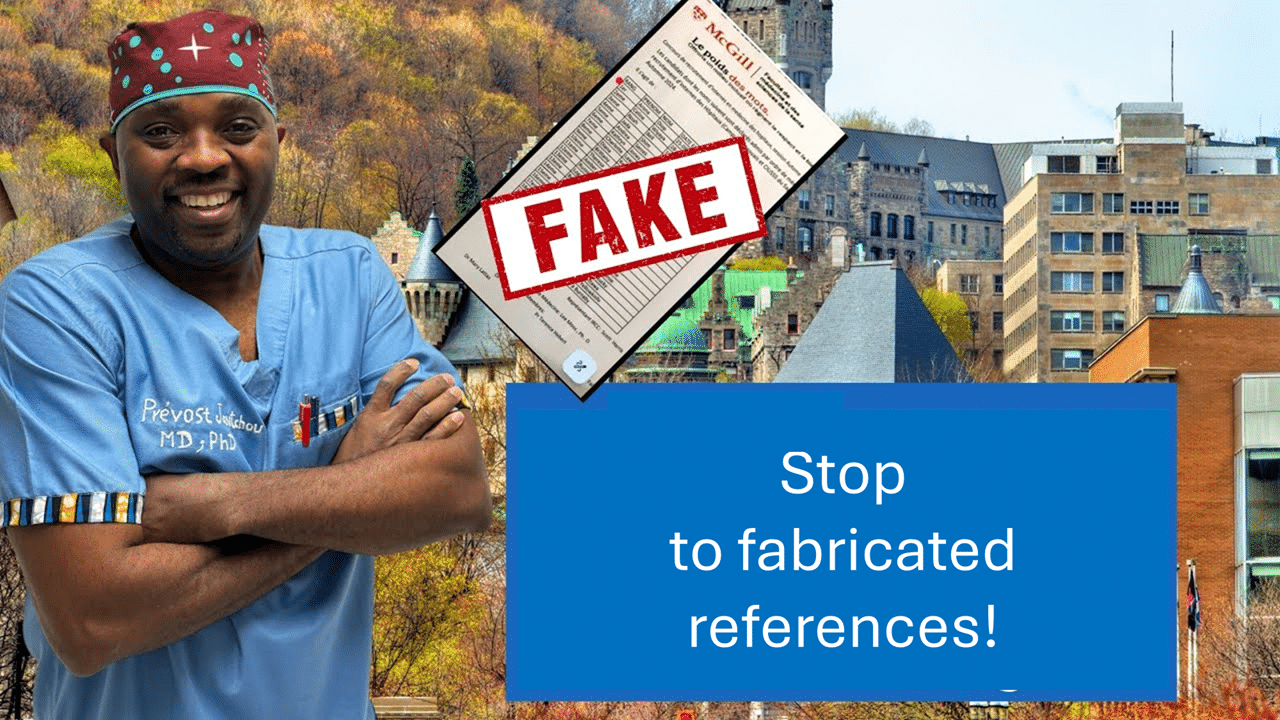
The reliability of references is the foundation of scientific literature: each citation must refer to an authentic and verifiable source. When references point to nonexistent works, it becomes impossible for readers, reviewers, or policymakers to properly assess the robustness of the data on which the conclusions are based. Fabricated references (references whose claimed titles do not correspond to any existing publication) can result from the indiscriminate use of authorship tools based on generative artificial intelligence.
Recently, The Lancet[1] published an article on the integrity of references based on 2.5 million biomedical articles published over a three-year period, showing that fabricated references are widely present in peer-reviewed scientific literature. Out of 97.1 million references checked, 4,046 fabricated references were identified in 2,810 articles. The fabrication rate increased more than 12 times, rising from about four per 10,000 articles in 2023 to 51.3 per 10,000 articles in the fourth quarter of 2025, reaching 56.9 per 10,000 articles at the beginning of 2026.
As far as we know, there are no similar studies in other scientific fields; but we can assume that such behaviors exist.
Two consequences:
1 – Always verify the truthfulness of the references; in case of doubt, one solution is to contact the authors directly.
2 – Such behavior can discredit the scientific value of certain works.
[1] Topaz M, Roguin N, Gupta P et al. (2026) “Fabricated citations: an audit across 2·5 million biomedical papers”. The Lancet, 407, 1779-1781.
